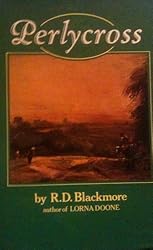
Introducing “Perlycross” by R.D. Blackmore

Tags

“And we know that in all things God works for the good of those who love him, who have been called according to his purpose.” Romans 8:28

“But the clergyman, with a godly joy, and immortal faith, and heavenly hope, knelt at the foot, and lifted hands and eyes to the God of heaven. ‘Behold, He hath not forsaken us! His mercy is over all His works. And his goodness is upon the children of men.'” – Perlycross

This R. D. Blackmore novel unfolds in a small country village in Devonshire. Whereas Blackmore’s more famous novel, Lorna Doone, takes place on the haunting, wild moors (with a forbidden romance to match) Perlycross presents ordinary civilization – the everyday lives of townspeople in a country parish, and, more specifically, how ordinary people are affected by extraordinary events. Blackmore’s portrayal of small-town life is somewhat typical: gossip, rumours, the token idiosyncratic small-town characters, the endearing provincialism of country folk. Cranford fans will enjoy Perlycross; it offers more of the same.

And yet a gothic thread does weave through Perlycross. People living ordinary lives become immediately fascinating when the scandalously macabre descends upon them, upending the little knitting clubs, choir practices, butter churning and other commonplace activities characteristic to 19th century country living. The Christian themes the novel concerns itself with include, firstly, how characters hold on to (or lose) their faith in times of calamity and doubt and secondly, the way they treat their fellow brethren in the midst of suspicion and superstition. The curate of Perlycross, Reverend Penniloe, the only noble Christian of the novel, chooses to persist in believing that all these trials are for their benefit, and that all things will work out for the good for those who trust in God. His quiet, meek faith in times of seemingly meaningless tribulations and endlessly frustrating obstacles Blackmore extols for our example.

Perlycross reminds us that God loves a faith that waits for salvation even unto the eleventh hour, when circumstances appear bleak and hopeless. Biblically we know this to be true. Consider Moses and the Isrealites caught between the Red Sea and an Egyptian army with no way out, Joseph locked up in a jail cell and believed dead, the Saviour dying on a cross at the apparent end of his ministry. While the Perlycross church literally crumbles further and further into disrepair, no one holds out any hope of its restoration except for the humble Penniloe, who clings to his faith, however meekly, no matter the outlook. The church today might take a lesson from Blackmore’s protagonist and his “eleventh-hour faith.”

Blackmore largely drew on his childhood for Perlycross (the place he grew up) and it is also his favourite novel, despite the eclipsing success of Lorna Doone. This book is also out of print, so curious readers will only be able to find used copies (try The Advanced Book Exchange) or ebooks.


Is the Novel Inherently Protestant?

Tags

, , , ,

What good will it be for someone to gain the whole world, yet forfeit their soul? Or what can anyone give in exchange for their soul? – Matthew 16:26

Joseph Bottum argues in his article “The Novel as Protestant Art” in Books & Culture: A Christian Review that the novel is and has always been an art form that is quintessentially Protestant. The genre of the novel never existed before the Protestant Reformation because prior to it, Christian salvation, according to Bottum, had never been understood as an individual responsibility. Instead, the church – its teachings, sacraments, indulgences and penances – acted as the agent of salvation. Only after the Five Solas of the Reformation (by scripture alone, by faith alone, by grace alone, in Christ alone, and glory to God alone) could a writer pen a character’s conversion to Christ on an island all alone solely by reading the Bible, thus fulfilling all of the Five Solas. This scene occurred in what many consider to be the first English novel, Robinson Crusoe:

[When] we reach the central moment of the novel, Robinson Crusoe finally reads the Bible he has brought from the wrecked ship, and – without a church community or a teacher to aid him, sheerly from the power of the divine text itself on an individual conscience – he writes, “I threw down the Book, and with my Heart as well as my Hands lifted up to Heaven, in a kind of Extasy of Joy, I cry’d aloud, Jesus, thou Son of David, Jesus, thou exalted Prince and Saviour, give me Repentance!”

Like no other art form, the novel presents the greatest in-depth study of the psyche and the consciousness – in other words, the soul – ever. No previous genre delved so deeply into such self-awareness or focused so entirely on the soul on its journey of salvation. Unified narrative elements, such as plot, character and theme achieve this. And the novel as a genre reaches its height of unified soul-searching in the Victorian Era. Consider Elizabeth Gaskell’s Mary Barton, a social problem novel that values individual reformation – a change of heart – above economic and political reform. Such an approach defines her book as inescapably Protesant. Bottum comments:

However powerfully our society controls us, it is an epiphenomenon created by the metaphysical drama of the soul. However completely our culture shapes us, it is, on the cosmic scale, only the prismatic spray tossed up by individuals acting out their individual salvation plays. Where, except in the reformation of many separate selves, could we find a solid basis for change in their society and culture?…. Only the soul has true metaphysical weight and consequence, and the novel is the story of a soul’s journey.

Novels imply the existence of an all-powerful Creator-God guiding the destinies of the characters in his stories. And the destination of every true soul-searcher is God-likeness – sanctification. The heroine learns lessons, swallows her pride (or prejudice), comes out the other end wiser, older, maturer, a better person – more sanctified. None of this would be possible without an ordered, meaningful universe where individual lives themselves contain meaning, just waiting to be discovered. Bottum says, “The journey of the self is the deepest, truest thing in the universe, and the individual soul’s salvation is the great metaphysical drama played out on the world’s stage.”

In university, I was devastated to hear the novel (Pride and Prejudice given as an the penultimate example) more or less written off as a symbol of the bourgeoisie, functioning to reinforce class division. So I am somewhat pleased to read Bottum’s take; I agree that considering the religious beliefs of a writer should come before whatever social analysis (Marxist, feminist, postcolonialist, etc) but are often never given the time of day because Marxism etc. hold religion to be merely a function of class. However, Bottum is Catholic, and I get the sense that his article is critical of the novel’s Protestant stranglehold. He says he wishes he could go back and “start over, pretending the march of modernity and the parallel histories of the novel and the self hadn’t happened.” What do you think? Do you perceive the novel as the journey of the soul? Leave your thoughts below.


Introducing “A Child’s Garden of Verses” by Robert L. Stevenson

Tags

, , ,

In addition to literature for grown-ups, the Victorians bequeathed us wonderful stories and poems for children. Alice in Wonderland and Peter Rabbit are two such Victorian classics no child should grow up without reading. The poems of Robert Louis Stevenson (best known for Treasure Island) in A Child’s Garden of Verses (1885) are no different. Some more well-known titles from this poetry collection include “My Shadow,” “Land of Nod” and “The Swing.”

The Victorians possessed a marvelous talent for capturing the glorious wonder and fantasy of childhood. Somehow, writers like Stevenson, though grown-up themselves, retained the eyes and mind of a child. In A Child’s Garden of Verses the reader can relive with an uncanny vividness young delights such as soaring through the air on a swing or making forts out of furniture, and, most significantly, perceiving nature as a portal to fairyland. And yet Stevenson frames the wonder and wild adventure of youth with the comforting and constant structures of daily domestic routines such as mealtimes and bedtime, the cycles of the sun and moon and the changing of the seasons in soothing, rhythmic rhyme. Stevenson gives children strange and fantastical spaces to explore and familiar, safe spaces to retreat.

A Child’s Garden of Verses is an excellent introduction to classic literature for children of any age (my three-year-old daughter wants me to read it to her every day). It’s also much more interesting for the parent to read than the typical picture book! Many illustrated editions of this poetry collection exist, but two that stand out are Gyo Fujikawa’s and Tasha Tudor’s. The text is the same; only the illustrations are different.

But there’s a caveat. Stevenson was actually an atheist. Look for an upcoming post that explains why I still consider A Child’s Garden of Verses Christian Victorian literature.

Introducing “The Real Charlotte” by E. OE. Somerville and Martin Ross

Tags

, , , , ,

I endorse this novel on my blog with hesitation because my research has led me to believe only one of the authors may be a Christian. One difficulty for a blog that seeks to unearth obscure authors is that sometimes, unfortunately, available biographical information is sparse.

The Real Charlotte was written by a female cousin duo, Martin Ross and Edith Somerville, and while Martin Ross came from a protestant family and is described in The Stanford Companion to Victorian Fiction as a “keen church-goer,” Somerville involved herself heavily in the occult, consulting mediums and spiritualists and utilizing a bizarre spiritualist writing technique called “automatic writing.” She even continued to write novels “with” Ross after the latter’s death by holding séances. No evidence suggests Ross engaged in such activity, strictly forbidden in the Bible, but other than her eager inclination to attend church, not much recorded evidence of her faith exists.

All that said, The Real Charlotte is a beautiful novel that reminds me why I keep coming back to 19th century literature and has helped me put my finger on what I personally find lacking in modern and contemporary literature (maybe more on that in another post). So the reader can decide if she wants to pick up this book or not.

Written by Irish authors in 1894, The Real Charlotte is actually considered one of Ireland’s great novels. Ross and Somerville are exceedingly talented writers, and they present an utter mastery of characterization in this novel. The characters are imbued with such finite detail that it is almost as if the narrator conjures them to life, and reading the book is like looking through a window at real people. This is also the first book I have ever read where the protagonist and the antagonist completely switched places in my esteem before the story was through, so that I began to doubt which one was the heroine.  Although the first third of the novel was slow going, the second half rewarded perseverance. Rivalry, romance, class and the growth of evil in the human heart interweave to bring this story of two desperate cousins searching for love to a surprising climax, and the lifelike characters will have the reader arguing and pleading with the narrator over their destinies.

Of interesting note, The Guardian included The Real Charlotte in its list of The 10 Best Neglected Literary Classics.

A Victorian Valentine

Tags

, ,

Originally for Valentine’s Day I was going to review Victorian Short Stories: Stories of Successful Marriages, which I expected to be full of stories celebrating love and devotion in marriage, that consummate expression of Christian virtue in the Victorian era. However, this bizarre book ought to have sarcastic quotations marks around “Successful” because all the marriages were more or less miserable, being either founded on deceit, marred by unthinkable tragedy or fraught with misunderstanding (notably, almost none of the authors turned out to be Christians, except perhaps Elizabeth Gaskell and hers was the “happiest” story of them all). Humourously, there is also a book in this series entitled Victorian Short Stories: Stories of Troubled Marriages. I can only imagine how depressing the marriages in that book must be.

So I decided to fall back on a classic love poem for Valentine’s Day, “How Do I Love Thee?”  by Elizabeth Barrett Browning, a Christian, who also wrote Aurora Leigh, which I reviewed here. You might remember from high school English class that the sonnet is considered the ultimate love poem.


How Do I Love Thee? (Sonnet 43)

How do I love thee? Let me count the ways.
I love thee to the depth and breadth and height
My soul can reach, when feeling out of sight
For the ends of being and ideal grace.
I love thee to the level of every day’s
Most quiet need, by sun and candle-light.
I love thee freely, as men strive for right;
I love thee purely, as they turn from praise.
I love thee with the passion put to use
In my old griefs, and with my childhood’s faith.
I love thee with a love I seemed to lose
With my lost saints. I love thee with the breath,
Smiles, tears, of all my life; and, if God choose,
I shall but love thee better after death.
 1850

Book Giveaway Winner Announced

Congratulations to Jeff on winning a copy of of Queen Victoria by Walter L. Arnstein. Enjoy!

Introducing “The Didache”

Tags

Many Christians have never heard of The Didache, an anonymous manual on the principles and practices of the Christian faith. Written by early church disciples in the first or second century (depending on which scholar you ask), this brief treatise on the faith for believers is almost 2000 years old. So what is it doing on a blog about the 19th century? Well, although historians were aware of The Didache‘s existence for centuries (other texts referred to it), the work itself had never been seen, until it was discovered by an archbishop in Istanbul in 1873. The first English translation of The Didache was published in New York on March 20, 1884 (interestingly just a few weeks before Easter), selling 5000 copies in one day, with scholars from both sides of the Atlantic astounded at the amazing discovery of such an archaic text.

In my research I haven’t been able to find much regarding reception of the work (except that many were skeptical as to its authenticity) and its influence on 19th century life and thought, other than it was apparently extremely popular; beyond that, we can only speculate on its significance for Victorians. Although Christianity was still prevalent at this time, consider also that atheism was gaining a more accepted and legitimate place in philosophical and societal thought, largely influenced by Nietzsche, Darwin, Freud and Marx. Some of the most well-known literary authors of the period were atheist (George Eliot and Thomas Hardy, for example).

You can read The Didache online here.

Have you heard of or read The Didache? Are you interested in reading it? Why do you think it might have been so popular at this particular time in history? Do you think it would share the same kind of popularity if it had been found today?


Introducing the Christian Queen Herself, and a Book Giveaway Contest

Tags

, , , ,

“I believe in the finished work of Christ for me.” – Queen Victoria

“How delightful it is to be married. I would not have dreamed that anyone could be so happy in this world as I am.”  – Queen Victoria

Lovers of Victorian novels and poetry, such as myself, enjoy such literature in large part because of the “Victorian” qualities these works all share in common. Tracing the source of this “Victorian-ness” requires considering Queen Victoria herself, the eponym of the era and its incomparably greatest (and longest – she reigned for sixty-three years, which is the current record) influence. Walter L. Arnstein’s biography of the great lady, Queen Victoria, gives a rounded and interesting introduction to the Queen, sectioned into chapters on her youth, married life, widowhood, political involvement, charitable works and more.

(Contest over – winner announced here.)

The Christian Queen

It is little wonder that a good deal of Victorian literature is Christian when the figurehead of the period believed the Bible herself, and vowed, in her coronation, to “maintain the Laws of God, the true profession of the Gospel and the Protestant Reformed religion as established by law.” (Arnstein 42)  And Protestant she was; when the the moral infallibility of the pope was declared in 1870 (more recently than many people realize), Queen Victoria was disgusted and called it “disgraceful.” (136) She even disliked many of the religious practices of her own church, the Church of England, and preferred churches that followed Reformed tradition, such as the Presbyterian Church of Scotland. Considering this, it is hardly surprising that many Reformed denominations, such as Dissenters, Baptists and Methodists, thrived while she was on the throne.

Wife, Lover, Mother

Queen Victoria and Prince Albert’s felicitous courtship and happy marriage actually reads something like a 19th century romance novel. “About one matter Victoria felt certain: she would marry only for love,” Arnstein writes in his biography. (46) And indeed she did, for after their nuptials she pens in her diary, “how delightful it is to be married. I would not have dreamed that anyone could be so happy in this world as I am,” and Albert returns her sentiments, telling her “Your image fills my whole soul. Even in my dreams I never imagined I should find so much love on earth.” (55)

Victoria and Albert’s wedding was an enormous public affair, with thousands of cheering fans lining London streets as the royal couple’s wedding carriage passed by (not unlike Diana and Charles’ and Will and Kate’s weddings). After their first baby was born, Albert stayed by his wife’s side as nurse, tenderly caring for her every need. They went on to produce eight more children and Albert in particular was noted for his fatherly doting and care, not too dignified to wrestle on the floor with his little ones, take them on outings to the zoo and build them toys and playthings, including a little play cottage with miniature kitchen, stove, pots, pans and the works. The royal family became a symbol and model of domestic bliss in the media. Benjamin Disraeli, British prime minister twice while Victoria was on the throne, described the queen thus: “‘She who reigns over us has elected, amid all the splendour of empire, to establish her life on the principle of domestic love.'” (57)

The Well-Intentioned Imperialist

Queen Victoria positioned herself strongly against slavery in both her public dealings and in her personal diary. She believed that “colonisation could be justified only if it promoted the abolition of slavery where that institution yet existed and if it bettered the lives of subject peoples.” (181) African kings who visited her stated their appreciation of her work in their countries (she being the head of the largest empire in the world at the time). She agreed with them, though, that “the natives [ ] were so unjustly used, and in general her very strong feeling (and she has few stronger) that the natives and coloured races should be treated with every kindness and affection, as brothers, not – as, alas! Englishmen too often do – as totally different to ourselves, fit only to be crushed and shot down!” (181) Arnstein’s inclusion of this information about Victoria’s feelings on colonialism sheds a different light on the vilification of colonialism in academia. There’s something worth considering here about good intentions and the benefit of hindsight….

The Charitable Philanthropist

Elsewhere I have discussed the significant charitable movement in Victorian society, as explored in social problem novels such as Mary Barton by Elizabeth Gaskell. Victorians felt a strong sense of duty toward their fellow creatures in need, and Queen Victoria was very much a driving force in the 19th century philanthropic movement. She did not believe, like the Marxists and socialists, in social welfare services provided by the government and acquired through high mandatory taxes, but rather through voluntary social charity and philanthropy superintended by organizations “whose purpose it was to help educate, help medicate and help house the poorer classes of society and to relieve the victims of natural and man-made disasters.” (174) It was a commonly-held belief that charity organizations enriched the lives of volunteers by instilling in them a sense of purpose and civic pride, and promoted collaboration between the classes. (174) Volunteers also undoubtedly brought (and bring) enthusiasm and genuine concern to their work. Arnstein continues with this chronicling of amazing social generosity:

By the 1860’s, ‘most large towns and cities could take satisfaction in the voluntary hospitals, infirmaries or national schools, domestic missions, temperance societies and district visiting charities.’ Even small villages could boast of their clothing and boot clubs, their mothers’ meetings, and their Sunday schools. In 1885 The Times marveled that the monies collected that year for London charities alone exceeded the annual budgets of several European nations. (174)

The queen’s extraordinary personal patronization of charitable organizations and contributions to the founding of hospitals, almshouses and more led to her name “Victoria, the Friend of the Afflicted.” She even personally knit hats and blankets for soldiers and sent them chocolates. (191) Upon her death a Westminster Abbey minister said, “Every clergyman, philanthropist and social reformer has had, these sixty-three years past, an ally and sympathizer on the throne of his country.” (191)

Art and Literature Lover

It will please fans of Victorian literature that Queen Victoria was a great reader herself. Arnstein records that she enjoyed reading Hannah More, Maria Edgeworth and Sir Walter Scott, and especially liked James Fenimoore Cooper’s The Last of the Mohicans and Washington Irving’s Conquest of Grenada. (25) Both she and her husband appreciated many forms of art, including poetry, opera, paintings, sculptures and architecture.

_____________________

Much more could be said about both Victoria and Albert’s astounding political industriousness, how they laboured daily for their country and how incredibly involved in and knowledgeable of political and international affairs the Queen was, even more than her own parliament, as her daily personal letters and diary attest to. If you want to read more about Victoria, enter to win a free copy of Arnstein’s biography by doing at least one of three things: leave a comment below, like or share this post on social media, or subscribe to become a follower to this blog for the first time. International entries welcome. The book will be a secondhand copy (in good condition) from The Advanced Book Exchange, an excellent source for rare and affordable literature. The deadline is 12:00 a.m.  Jan. 31 ET and winners will be announced February 1st. Thank you!
A Couple of Victorian Christmas Carols

Tags

, ,

We owe many of our Christmas carols to the Victorians. In 2008, the BBC named Christina Rossetti’s “In the Bleak Midwinter,” written in 1874 and set to music by Harold Darke in 1911, the best Christmas carol of all time, lyrically and musically. It is not as commonly sung today, although you may have read its final verse as a poem before. Darke’s arrangement is considered more musically complex than Gustav Holst’s. Listen to them both for yourself and see if you can hear the difference.


In the Bleak Midwinter


(See the Gustav Holst and the Harold Darke versions performed by the King’s College boys choir)

In the bleak mid-winter
Frosty wind made moan,
Earth stood hard as iron,
Water like a stone;
Snow had fallen, snow on snow,
Snow on snow,
In the bleak mid-winter
Long ago.

Our God, Heaven cannot hold Him
Nor earth sustain;
Heaven and earth shall flee away
When He comes to reign:
In the bleak mid-winter
A stable-place sufficed
The Lord God Almighty,
Jesus Christ.

Enough for Him, whom cherubim
Worship night and day,
A breastful of milk
And a mangerful of hay;
Enough for Him, whom angels
Fall down before,
The ox and ass and camel
Which adore.

Angels and archangels
May have gathered there,
Cherubim and seraphim
Thronged the air,
But only His mother
In her maiden bliss,
Worshipped the Beloved
With a kiss.

What can I give Him,
Poor as I am?
If I were a shepherd
I would bring a lamb,
If I were a wise man
I would do my part,
Yet what I can I give Him,
Give my heart.

Lyrics written by Christina Rossetti in 1874, published in 1904; music added in 1904 and 1911

Love Came Down at Christmas

(see it performed here)

Love came down at Christmas,
Love all lovely, love divine;
Love was born at Christmas,
Star and angels gave the sign.

Worship we the Godhead,
Love incarnate, love divine;
Worship we our Jesus:
But wherewith for sacred sign?

Love shall be our token,
Love shall be yours and love be mine,
Love to God and to all men,
Love for plea and gift and sign.

Lyrics by Christina Rossetti, 1885; set to music by Harold Darke and others

More Christian Victorian Readings for Advent

Tags

, ,

For Advent

Sweet sweet sound of distant waters, falling
On a parched and thirsty plain;
Sweet sweet song of soaring skylark, calling
On the sun to shine again;
Perfume of the rose, only the fresher
For past fertilizing rain;
Pearls amid the sea, a hidden treasure
For some daring hand to gain; –
Better, dearer than all these
Is the earth beneath the trees:
Of a much more priceless worth
Is the old, brown, common earth.

Little snow-white lamb, piteously bleating
For thy mother far away;
Saddest sweetest nightingale, retreating
With thy sorrow from the day;
Weary fawn whom night has overtaken,
From the herd gone quite astray;
Dove whose nest was rifled and forsaken
In the budding month of May; –
Roost upon the leafy trees;
Lie on earth and take your ease;
Death is better far than birth:
You shall turn again to earth.

Listen to the never-pausing murmur
Of the waves that fret the shore:
See the ancient pine that stands the firmer
For the storm-shock that it bore;
And the moon her silver chalice filling
With light from the great sun’s store;
And the stars which deck our temple’s ceiling
As the flowers deck its floor;
Look and hearken while you may,
For these things shall pass away:
All these things shall fail and cease;
Let us wait the end in peace.

Let us wait the end in peace, for truly
That shall cease which was before:
Let us see our lamps are lighted, duly
Fed with oil nor wanting more:
Let us pray while yet the Lord will hear us,
For the time is almost o’er;
Yea, the end of all is very near us;
Yea, the Judge is at the door.
Let us pray now, while we may;
It will be too late to pray
When the quick and dead shall all
Rise at the last trumpet-call.

by Christina Rosetti, 1849